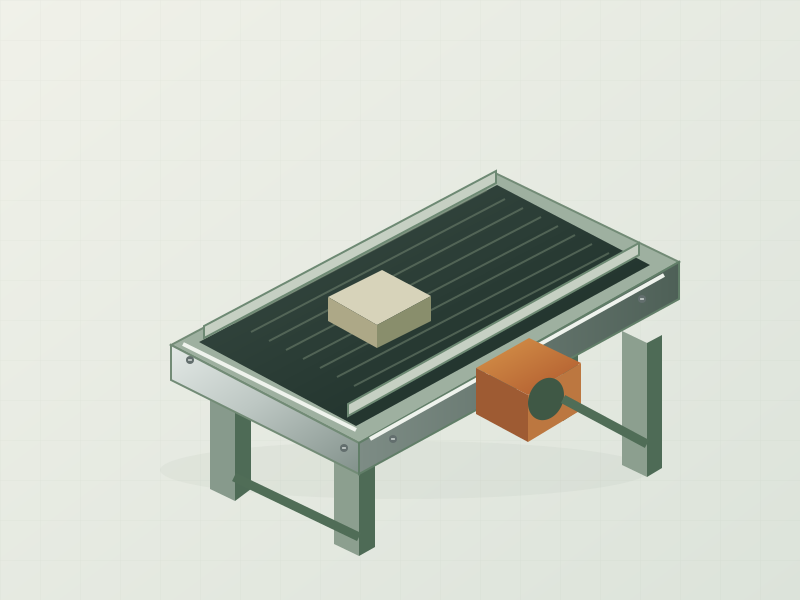
Conveyor discussions often begin with length and speed. Those are useful inputs, but the transfer at either end deserves equal attention. A small gap, a change in height or an unclear stop condition can dominate the behaviour of a short module.
Draw both neighbouring stations
Include the surface immediately before and after the conveyor, even when another supplier owns that equipment. Mark the transfer height, gap and side guides, along with the smallest support area on the item being moved. A plan and a side view usually explain more than a component image alone.
Describe the waiting state
What happens when the next station cannot accept an item? Agree where the item waits, how arrival is detected and how the upstream station is informed. Record the expected behaviour after a sensor is blocked, a connection is interrupted or the equipment restarts. These are interface questions to resolve within the complete machine design.
Test items that challenge the handoff
A stable sample can make a transfer look simpler than it is. Include the smallest footprint, the least rigid packaging and any item whose centre of gravity can shift. Record orientation and condition so that a later test uses comparable samples.
Keep access in the layout
Belt adjustment and cleaning need space after the module has been installed. The CV600 illustration is a fictional transfer concept; its useful role is to make the discussion concrete. Final load, speed, controls and safeguarding depend on the agreed system and test conditions.